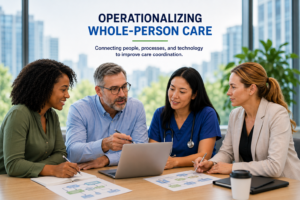
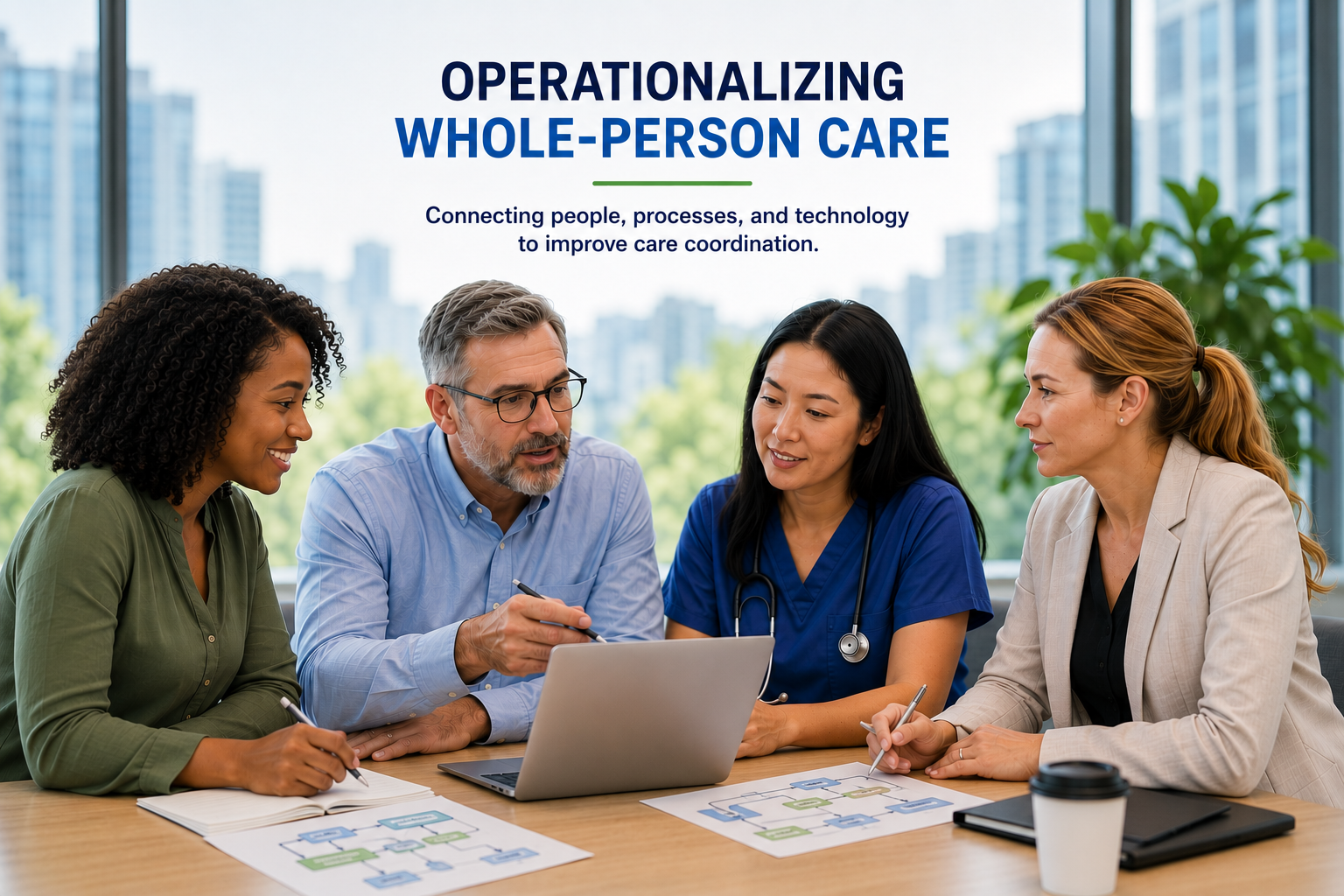
Members’ needs rarely fit neatly into a single program. Medical, behavioral, and social factors frequently intersect, requiring coordination across care management, utilization management, behavioral health, primary care, specialists, and community-based organizations.
Most healthcare organizations recognize this reality. The challenge isn’t identifying members’ needs. It’s creating an operational model that enables teams to consistently coordinate care across programs, disciplines, and transitions.
As organizations expand care management programs, strengthen behavioral health integration, and address social drivers of health, success increasingly depends on how well those efforts work together.
Page Content
Coordinating Care Across Programs
Healthcare organizations have invested significantly in care management, utilization management, quality improvement, behavioral health integration, and social care initiatives. Each plays an important role in supporting member outcomes.
The challenge begins when those efforts intersect.
Care management, utilization management, behavioral health, and social care teams often operate through separate workflows, assessments, and care plans. Prior authorization activities, transitions of care, and quality initiatives introduce additional coordination points throughout the member journey.
Without a shared operational framework, coordination depends on manual communication, disconnected processes, and individual effort rather than standardized workflows. Even high-performing teams can struggle to maintain consistent visibility across multiple programs, departments, and care settings.
The Operational and Financial Impact
As member needs become more complex and healthcare costs continue to rise, organizations responsible for managing complex populations are under increasing pressure to improve outcomes, control costs, and strengthen care coordination. With healthcare costs projected to see their highest annual increase in more than a decade, that pressure is only expected to grow.¹
Organizations are increasingly expected to demonstrate that coordinated care delivers measurable value, not only through improved member outcomes, but also through greater operational efficiency, stronger collaboration across teams, and better stewardship of healthcare resources.
Identification Is Only the First Step
Most organizations already know which members have medical, behavioral, and social needs.
The more difficult challenge is ensuring every team involved in that member’s care is working from the same understanding of the member’s current needs, goals, and status.
As assessments are completed, care plans evolve, prior authorization decisions are made, and members transition across care settings, information must remain connected. Without that operational continuity, teams spend valuable time reconciling information instead of acting on it.
Effective whole-person care requires more than connected systems. It requires connected workflows that support consistent collaboration across care management, utilization management, and interdisciplinary teams.
Supporting Whole-Person Care Operationally
Creating that level of coordination requires more than bringing information together. It requires giving every team access to the same operational view of the member while supporting consistent decision-making throughout the care journey.
Incedo helps organizations coordinate care across medical, behavioral, and social needs through a shared member profile that gives every care team member access to the information they need to make informed decisions.
From that shared member profile, organizations can:
- Identify and prioritize members based on risk.
- Complete assessments and automatically generate person-centered care plans.
- Support prior authorization workflows from the same member view.
- Identify and prioritize members based on risk.
- Respond to quality alerts and follow configurable workflows that keep teams aligned throughout the member journey.
Instead of managing separate programs in parallel, organizations gain the visibility and operational workflows needed to support stronger continuity of care, improve collaboration across teams, and make more informed decisions at every transition.
Coordination as an Operational Strategy
As member needs become more complex and expectations continue to evolve, whole-person care cannot remain a standalone initiative layered onto existing programs.
Leading organizations are embedding coordination into their day-to-day operations by aligning people, processes, and technology around a shared view of the member. This enables care management, utilization management, behavioral health, and interdisciplinary teams to work from the same information, follow connected workflows, and support more consistent decision-making throughout the member journey.
Building an operational model for whole-person care isn’t simply about connecting data. It’s about creating an environment where every team has the visibility, workflows, and shared understanding needed to deliver coordinated, informed care.
If your organization is evaluating how to strengthen whole-person care across medical, behavioral, and social needs, we’d welcome the opportunity to show you how Incedo can help.
_________________________________________________________________
Source
¹ Milliman. 2026 Milliman Medical Index. Published May 20, 2026.